Graduating interns Anasuya, Joy, David, Jackson, and Jose with Nancy DeStefanis, Executive Director (seated).
Youth Naturalist Internship Program - 2024
San Francisco Nature Education provides interactive environmental education programs that develop leadership and stewardship in youth and adults. Our school programs focus on providing educational enrichment to students from underserved communities. We use local parks as natural classrooms to observe local and migratory birds and to provide inspiring and engaging natural experiences.
Our overarching goal is to create tomorrow’s environmental stewards and leaders by inspiring a life-long love of nature.
Our Youth Naturalist Internship Program runs every spring with the Heron Watch Program. Student interns must be in 6th, 7th or 8th grade, high school or college to apply.
We provide training and supply our interns with binoculars, field guides, and resource materials. Each of our interns is assigned to an experienced naturalist mentor.
In March, we conduct training for the Heron Watch Program. Our interns provide guided observation of the nests through high-powered spotting scopes and answer questions. Over 1000 children and adults attend this program annually.
The training program features:
Download application: Microsoft Word (.doc) | Acrobat (.pdf)
Click here to view and print the 2024 Heron Watch Flyer.
Click here to watch a video where interns share their experience with our internship program.
Click here to check out our intern magazine published in 2021.
Our overarching goal is to create tomorrow’s environmental stewards and leaders by inspiring a life-long love of nature.
- Our interns learn about environmental conservation, and natural history.
- Our interns complete a research project on a relevant topic at the site they have chosen.
- Our interns serve as naturalists guiding and educating the general public.
Our Youth Naturalist Internship Program runs every spring with the Heron Watch Program. Student interns must be in 6th, 7th or 8th grade, high school or college to apply.
We provide training and supply our interns with binoculars, field guides, and resource materials. Each of our interns is assigned to an experienced naturalist mentor.
In March, we conduct training for the Heron Watch Program. Our interns provide guided observation of the nests through high-powered spotting scopes and answer questions. Over 1000 children and adults attend this program annually.
The training program features:
- Education by naturalists to learn local birds.
- Collecting data.
- Sketching the birds in their habitat.
- Communicating their knowledge of the local birds with the public through high powered spotting scopes.
- Writing reports for the SF Nature Newsletter.
- Habitat restoration for one Saturday at Strawberry Hill - Stow Lake during the spring program.
Download application: Microsoft Word (.doc) | Acrobat (.pdf)
Click here to view and print the 2024 Heron Watch Flyer.
Click here to watch a video where interns share their experience with our internship program.
Click here to check out our intern magazine published in 2021.
Graduating Class of 2022
4 Interns - Katie, Maddie, Hunter, Kate, and Joy - Senior Intern.
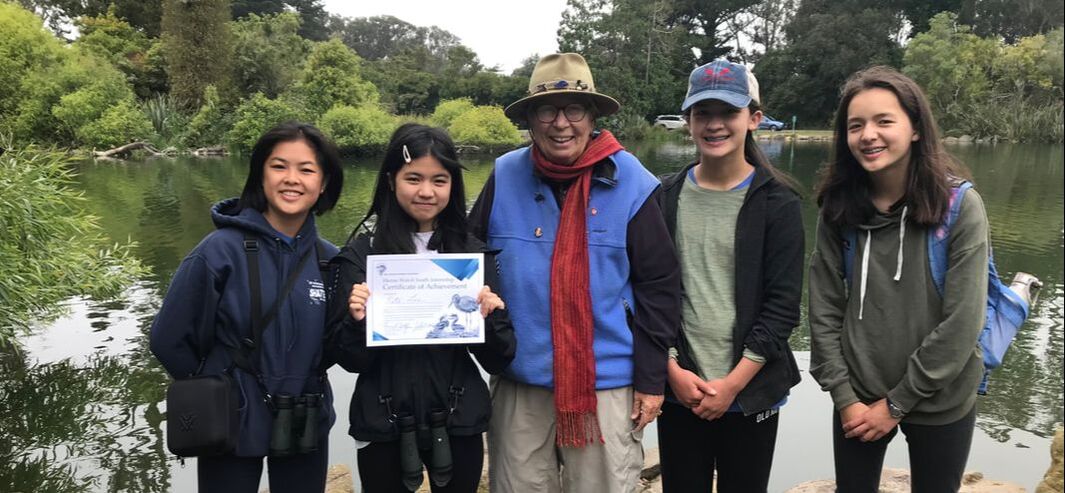
Joy, Kate, Ms. D, Maddie W., and Katie W. at Joy and Kate's Graduation in July. Photo Courtesy- SFNE
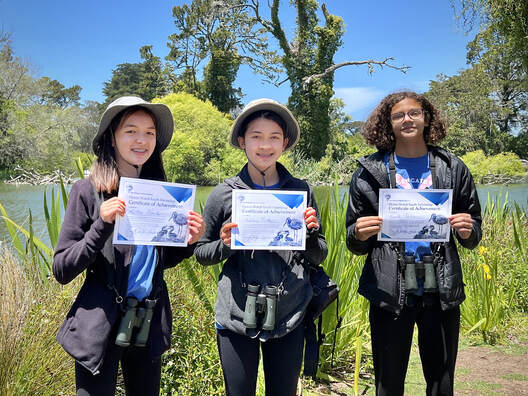
Interns Katie, Maddie, and Hunter with their Certificates. Credit - Helene Sobol
|
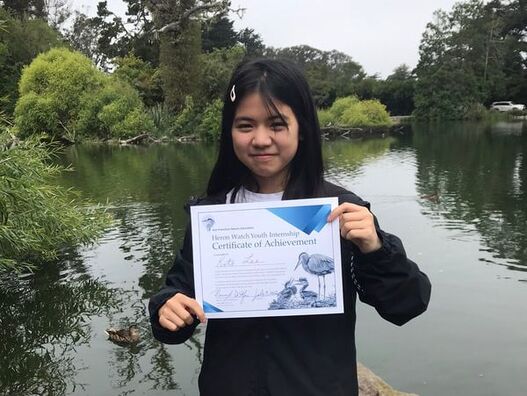
Kate with her Certificate. Courtesy SFNE
|